The Minimalist Runner's Guide to Injury Prevention

Injury prevention doesn’t need to be complicated. Most running injuries — knees, IT band, shins, plantar fascia, ankles — follow predictable patterns and respond to a handful of evidence-based interventions.
This guide covers the highest-impact strategies, in order of return on investment.
1. Track Your Shoes (The Single Biggest Prevention Tool)
If you only do one thing on this list, track your shoe mileage.
Running shoes degrade invisibly. The foam compresses, rebounds less effectively, and stops absorbing impact the way it was designed to. You typically can’t see this from the outside. The shoe looks fine until it suddenly doesn’t feel fine anymore.
By the time your knee starts aching on roads you’ve run without issue for years, your shoes may have been contributing to that problem for 50+ kilometers.
What to do: Add your shoes to RunMate Pro with starting mileage and a replacement target (400–500km for regular trainers on pavement, up to 700–800km for high-cushion models on mixed surfaces). The app tracks mileage automatically after every run.
2. Master the 10% Rule (and Sometimes Ignore It)
The 10% rule — increase weekly mileage by no more than 10% per week — is the most cited training principle in recreational running. It exists because most overuse injuries come from increasing load too fast.
The research is more nuanced: the specific percentage matters less than the principle of progressive overload. Don’t make large jumps in weekly mileage. When returning from time off, return conservatively. Treat your first week back like your third week, not your last week before the break.
Signs you’re increasing too fast: Performance gains slow while fatigue increases, you feel heavy on runs that used to feel easy, and you start noticing joint discomfort on easy runs.
3. Use Kinesiology Tape for Support During Recovery
Kinesiology taping is one of the most underused tools in recreational running. Athletes who work with physiotherapists encounter it regularly. Those who don’t often never learn it exists.
Kinesiology tape is an elastic, adhesive tape that provides gentle support to joints and muscles without restricting range of motion. Unlike rigid athletic tape, it works with your body’s movement rather than against it. Properly applied, it:
- Provides proprioceptive feedback (helps your nervous system sense joint position more accurately)
- Offers mild support that reduces strain on injured or vulnerable structures
- Can be worn for 3–5 days through running, showering, and daily activity
The RunMate Pro Runner’s Guide includes step-by-step kinesiology taping tutorials for all major running injuries — developed with TapeGeeks sports medicine expertise. The same tape protocols used by physiotherapists, accessible directly in the app.
4. Strengthen the Hip Abductors (Every Runner’s Weak Link)
The most common biomechanical cause of running injuries — knee pain, IT band syndrome, and even some shin splint presentations — is hip abductor weakness. These are the muscles on the outside of your hip that control how your pelvis and knee track during the landing phase of each stride.
When they’re weak, the knee tends to collapse inward slightly during each footfall. This creates excessive stress across the entire lower limb kinetic chain.
Three exercises, twice per week:
- Clamshells: Lying on your side, feet together, open the top knee like a clamshell. 3 sets of 15.
- Side-lying leg raises: Lying on your side, raise the top leg to 45 degrees and lower slowly. 3 sets of 12.
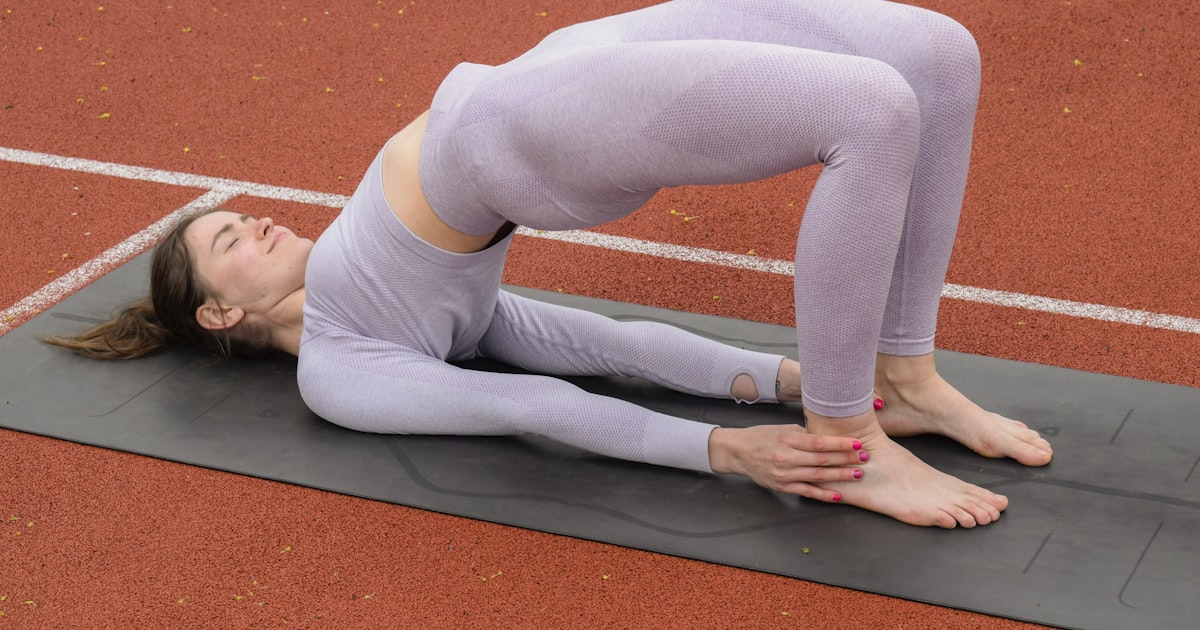
- Single-leg glute bridges: Bridge position, one foot elevated. 3 sets of 10 per side.
You don’t need a gym. You need 15 minutes, twice a week.
5. Address Pain at the First Signal, Not the Third
Runners have a cultural problem with pain tolerance: it’s worn as a badge of honor. “Running through” discomfort is celebrated. But there’s a critical distinction between the discomfort of effort — the burn of a hard workout — and the discomfort of tissue damage.
Joint pain (sharp, localized, changes with movement), tendon pain (often worse at the start of a run, sometimes improves mid-run, worsens the next morning), and bone pain (focal, worsens with direct pressure) are all injury signals, not training noise.
The signal that matters: If a pain persists across multiple runs, changes your gait, or worsens with continued activity, it requires attention — not pushing through.
Early intervention means: reduce mileage, address the biomechanical cause, use kinesiology tape for support, and see a physiotherapist if symptoms don’t improve within 1–2 weeks. Waiting 6–8 weeks to address a 2-week problem is how minor injuries become major setbacks.
The RunMate Pro Runner’s Guide
All five categories above — plus shoe wear, IT band, shin splints, Plantar Fasciitis, and ankle protocols — are covered in detail inside the RunMate Pro app.
The Runner’s Guide is included free with the app: no in-app purchase, no subscription.
Ready to run smarter?
Download RunMate Pro free on iOS — no account, no ads, no noise.
Download Free on iOS