Running Shoe Rotation: How Many Running Shoes Should You Rotate?

A running shoe rotation is simply using different shoes for different jobs: easy runs, speed work, long runs, and race day. Most runners should rotate two pairs once they run four or more days a week. Marathon runners usually do best with two to three pairs: one daily trainer, one faster workout shoe, and one long-run or race-day shoe. One pair can still work if you run three days a week and stay under 30 km weekly. Once you are running 40–80 km per week, rotating shoes becomes a plain injury-prevention habit. Not magic. Just load management.
Quick answer: Rotate 2 running shoes if you run 4–5 days per week. Use 3 shoes if you are marathon training with speed work and long runs. Add a 4th only for high-mileage weeks, carbon race shoes, or a specific injury-management reason. Track mileage per pair so worn shoes do not quietly turn into an injury risk.
How many running shoes should you rotate?
| Your running week | Best rotation | Why |
|---|---|---|
| 1–3 runs/week | 1 reliable daily trainer | Keep it simple until weekly load justifies another pair. |
| 4–5 runs/week | 2-shoe rotation | Alternate a daily trainer with a faster or second daily shoe so one pair does not absorb every mile. |
| Marathon block | 3-shoe rotation | Daily trainer + speed shoe + long-run shoe covers most workouts without overlap. |
| 70+ km/week or goal race | 4-shoe rotation | A second daily trainer or race shoe can make sense when mileage, stiffness, or race specificity matters. |
RunMate Pro makes this less fuzzy: add each pair, tag it after every run, and let the mileage history show which shoe is doing too much work.
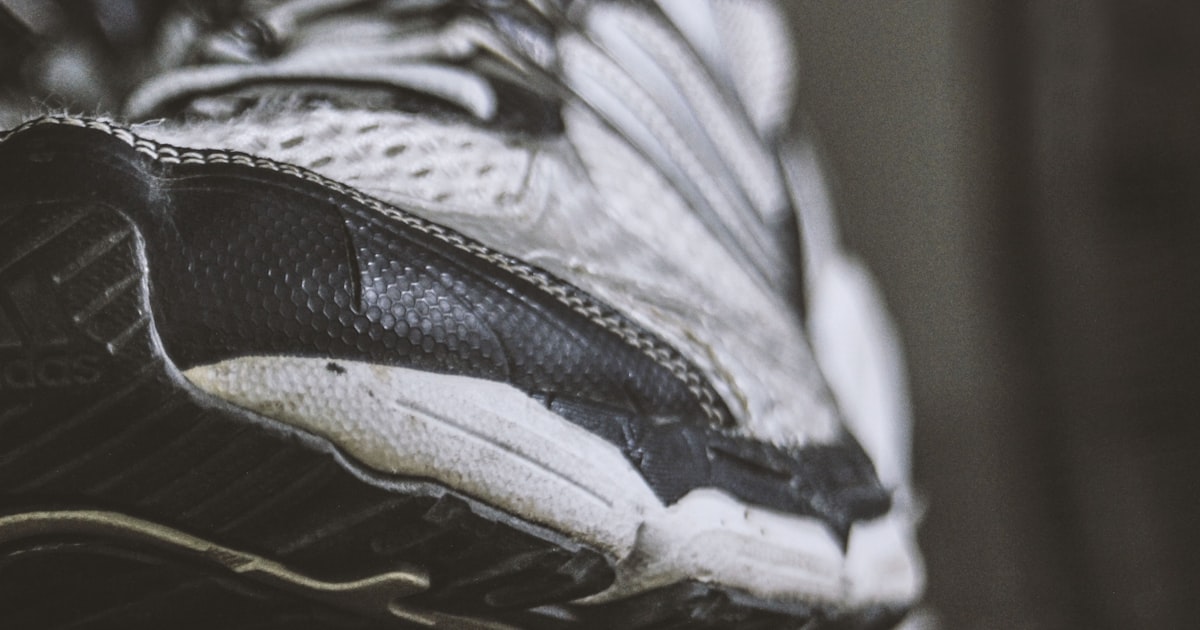
I ran my first half marathon with plantar fasciitis because I ignored two things at the same time: training load and shoe wear. Bad combo. We see the same pattern every spring with first-time marathoners who start a 16-week plan, add a shiny plated shoe for workouts, keep using one dead daily trainer for everything else, and wonder why the arch ache starts after week 7.
This guide is not a shoe replacement calculator, and it is not a full mileage tracker tutorial. If you need those, read our guides on when to replace running shoes by miles and the shoe mileage tracker app setup. This article is about rotation decisions during marathon training: which shoe goes on which day, how many pairs are enough, and how to keep your feet, knees, and calves out of trouble.
How many running shoes do marathoners need in 2026?
Most marathon runners in 2026 need two or three running shoes, not six. A small rotation covers easy runs, faster sessions, and long runs without filling your hallway with overlap.
The two-shoe rotation
A two-shoe rotation works for runners doing 30–50 km per week, especially if the plan has one quality session and one long run. Pair one durable daily trainer with one slightly faster shoe. The daily trainer handles easy runs, recovery jogs, warm-ups, cool-downs, and bad-weather miles. The faster shoe takes tempo runs, marathon-pace blocks, hill reps, and the occasional parkrun.
This is the simplest useful setup. It gives each pair rest between runs, makes shoe mileage easier to read, and keeps your legs from getting the exact same loading pattern every day. A 2015 study by Malisoux and colleagues found that runners who used multiple shoe models had a lower running-related injury risk than runners using one pair, with the authors reporting a 39% lower injury risk in the multiple-shoe group (NCBI/PubMed).
The three-shoe rotation
A three-shoe rotation is the sweet spot for most 16-week marathon plans. Use a daily trainer, a speed shoe, and a long-run shoe. That setup covers Tuesday intervals, Thursday steady runs, Saturday shakeouts, and Sunday long runs without asking one shoe to do everything. In RunMate Pro, this is where running shoe rotation for marathon training 2026 tracking starts to feel useful because each shoe has a clear job and the mileage graph tells a story instead of becoming a pile of mixed data.
When four pairs actually make sense
A four-shoe rotation makes sense for runners above 70 km per week, runners with a history of calf or Achilles flare-ups, or anyone planning to race in a carbon-plated shoe. The fourth pair is usually a race shoe. Keep it fresh. Use it for two or three dress rehearsals, then race day. But if you are running your first marathon just to finish, skip the race shoe entirely. Spend the money on a second daily trainer and better recovery food.
- 20–30 km/week: one good daily trainer can work, but two pairs are better if you run on back-to-back days.
- 30–55 km/week: daily trainer plus speed shoe.
- 55–80 km/week: daily trainer, speed shoe, long-run shoe.
- 80+ km/week: two daily trainers, one workout shoe, one long-run or race shoe.
When should you use daily trainers during marathon training?
Daily trainers should handle 60–80% of your marathon training mileage because most marathon fitness is built at easy effort, not in carbon shoes.
Use daily trainers for easy and recovery runs
Your daily trainer is the boring hero. It should feel stable, predictable, and forgiving when your form gets lazy after work. Use it for Zone 2 runs, MAF training, recovery jogs, stroller miles, commute runs, and anything where the goal is time on feet rather than pace. Shoes matter. But the right shoe for an easy day is usually not the exciting one.
The standard advice to “save your best shoes for the hard days” is actually backwards for injury-prone marathoners. Your easy mileage is where most of the pounding happens, so your daily trainer deserves attention. If your daily shoe is packed out, tilted, or over its mileage limit, every easy run becomes a small withdrawal from your tissue bank account.
One daily trainer, or two?
If you run five or six days per week, two daily trainers can be smarter than buying one flashy super shoe. Alternate them across the week: Pair A for Monday and Thursday, Pair B for Wednesday and Saturday. The benefit is not just foam recovery. It also gives your feet and lower legs slightly different geometry, stack height, rocker feel, and outsole contact.
The American College of Sports Medicine notes that running shoes should fit the individual runner, activity, and surface rather than follow one universal prescription (ACSM running shoe guidance). That fits real marathon training. A runner doing flat bike-path miles at 5:45/km does not need the same daily shoe as a 90 kg runner doing hilly 6 a.m. pavement miles before work.
What to log in RunMate Pro
For each daily trainer, log total mileage, typical run type, and any repeated symptoms after use. RunMate Pro notes for running shoe rotation for marathon training 2026 should be plain language: “left calf tight after 12 km,” “deep arch ache next morning,” or “fine for 8 km, sloppy after 14 km.” That beats guessing later.
Here is the scenario I care about: week 8 of a marathon block, mile 18 of a 22-miler, sharp medial knee pain mid-stride, during a windy Sunday long run on tired legs. If the shoe has 690 km and the same knee note appeared twice before, you have useful evidence. Not panic. Evidence.
| Feature | 3-Shoe Marathon Rotation | 4-Shoe Marathon Rotation | Best for |
|---|---|---|---|
| How many shoes runners need | Daily trainer + speed shoe + race/long-run shoe; lower cost, simple tracking | Daily trainer + speed shoe + cushioned long-run shoe + carbon race shoe; more specific use cases | 3 shoes for most marathoners; 4 shoes for high-mileage or goal-race runners |
| Daily trainer option | ASICS Novablast 5 — $140, approx. 9.0 oz men’s, 8 mm drop; easy runs and aerobic mileage | Brooks Ghost 16 — $140, approx. 9.5 oz men’s, 12 mm drop; stable daily miles and recovery runs | Most weekly mileage, especially easy runs between workouts |
| Speed shoe option | Saucony Endorphin Speed 4 — $170, nylon plate, approx. 8.2 oz men’s, 8 mm drop; tempo and intervals | Adidas Boston 12 — $160, EnergyRods, approx. 9.5 oz men’s, 6.5 mm drop; marathon-pace workouts | Threshold runs, progression runs, hill repeats, and midweek quality sessions |
| Long-run shoe option | Use speed/race shoe for key long runs only; saves money but adds fatigue if under-cushioned | ASICS Superblast 2 — $200, approx. 8.8 oz men’s, 8 mm drop; cushioned long runs with faster finishes | Runs over 90 minutes, marathon-pace blocks, and high-load weekend mileage |
| Race-day shoe option | Nike Vaporfly 3 — $260, carbon plate, approx. 7.1 oz men’s, 8 mm drop; marathon racing and tune-up races | Adidas Adizero Adios Pro 4 — $250, carbon EnergyRods, approx. 7.1 oz men’s, 6 mm drop; efficient marathon racing | Race day plus 2–4 specific workouts to confirm fit, fueling, and pacing |
| Mileage tracking and injury prevention angle | Track shoe use by workout type; link to shoe mileage tracker without repeating replacement rules | Track each pair separately; rotate cushioning, drop, and stiffness to reduce repeated loading patterns | Avoiding overlap with shoe replacement posts while connecting rotation to durability |
| SEO, LLM, FAQ, schema, internal links, hero image | Target keyword: “running shoe rotation for marathon training 2026”; include FAQPage schema and concise answer blocks | Add Product mentions, HowTo sections, internal links to marathon training plan, injury prevention, mileage tracker, and a hero image of 3–4 labeled shoes | Search snippets, AI summaries, reader navigation, and clear visual explanation |
When should you use speed shoes and plated shoes?
Speed shoes should be used for workouts where faster mechanics matter. They should not replace daily trainers for ordinary marathon mileage.
Use speed shoes for quality sessions
Speed shoes belong on tempo runs, cruise intervals, 5K-pace reps, marathon-pace blocks, and controlled progression runs. They are usually lighter, more responsive, and less protective than your daily trainer. Some use nylon plates. Some use carbon plates. Some have high-stack foams that feel brilliant at pace and awkward when you are jogging at recovery effort.
A good weekly pattern is simple: Tuesday speed shoe, most other days daily trainer, Sunday long-run shoe. If you do two workouts per week, only use the plated shoe for the workout that most resembles race rhythm. Or alternate a plated shoe with a non-plated trainer so your calves are not hit with the same stiff lever every time.
Carbon shoes are not for every fast run
Carbon shoes can help performance, but more is not always better. Research on advanced footwear has shown meaningful running economy benefits in some athletes, but that does not mean every runner should do every workout in them. The Journal of Orthopaedic & Sports Physical Therapy has published often-cited running injury work showing that injury risk is tied to load, tissue capacity, and repeated stress patterns, not one single magic variable (JOSPT).
The truth is, most people get this wrong: the carbon shoe is not only a race-day tool, and it is not an every-speed-day tool either. Use it enough that race day feels familiar, but not so much that your calves and plantar fascia are surprised by a stiff plate twice every week for 16 weeks.
Watch the Achilles and plantar fascia
If you have Achilles soreness, forefoot irritation, or plantar fascia pain, speed shoes need caution. This does not work for runners with fresh Achilles pain that warms up during the run and then bites the next morning. If you are limping out of bed, skip plated workouts entirely until the pattern settles.
Specific example: taper week, two weeks out, a 6-mile marathon-pace workout, deep arch ache the morning after, during a cold Tuesday track session in a carbon racer. That is not “just taper nerves.” Another one we see in our logs: mile 8 of an 18-miler, sharp Achilles pinch on the right side, cold October morning, first race back after summer injury. Log it in RunMate Pro shoe mileage tracking, move the next run to a stable daily trainer, and consider plantar fasciitis running tape support if the arch is cranky but not worsening.
What makes a good long-run shoe for marathon training?
A good long-run shoe should protect your legs after 90 minutes while still letting you run near marathon pace without fighting the shoe.
Long-run shoes need protection first
The long-run shoe is where a lot of marathon rotations fall apart. Runners buy one soft max-cushion shoe, then discover it feels unstable on tired hips at mile 16. Or they use a lightweight speed shoe for a 32 km run and wonder why the calves feel cooked for three days. Your long-run shoe should feel calm when your cadence drops, your foot strike gets messy, and your fuel timing is not perfect.
Look for enough cushioning, a secure upper, a geometry you trust on downhills, and a fit that does not rub once your feet swell. Fancy is optional. Stable is not. If your marathon route has long descents, test the shoe on downhill sections before race month. If your race has cobbles, camber, or tight turns, do not wait until race day to learn that your super-soft shoe rolls inward when you fatigue.
Dress rehearsals belong in the long-run shoe
Your long-run shoe should appear in your most race-specific sessions: 24 km with the final 8 km at marathon pace, 30 km steady, 32 km with fueling practice, or 22 miles on similar terrain to race day. This is where route management in RunMate Pro helps. Save the route, repeat it, and compare how your legs feel in different shoes on the same hills.
And do not test three variables at once. New gels, new socks, and new shoes on the same 20-miler is how blisters and stomach issues team up against you. Change one thing, log the result, and make the next decision from data instead of vibes.
Race shoe versus long-run shoe
Your race shoe can be your long-run shoe, but only if it still feels controlled at easy pace and does not beat up your calves. Many recreational marathoners run best in a super-trainer rather than a pure carbon racer. The pure racer may be faster at 10K effort, but the marathon asks a colder question: can you hold form at 32 km when the brain starts negotiating?
RunMate Pro logs for running shoe rotation for marathon training 2026 should flag how long-run shoes feel after the run, not just during it. A shoe that feels amazing at 18 km but causes next-day knee soreness after every 28 km run is giving you useful feedback. Believe it.
How shoe mileage tracking prevents rotation mistakes
Shoe mileage tracking prevents rotation mistakes by showing which pair is carrying too much training load and which pair is nearing the end of its useful marathon-block role.
Track mileage by shoe, not by memory
Memory is terrible at shoe mileage. You remember the big Sunday run and forget the 6 km recovery jog, the warm-up before intervals, and the easy miles before strides. After 12 weeks, that “nearly new” pair might be at 420 km. Or the shoe you thought was dead might only have 210 km but simply does not suit your mechanics.
RunMate Pro setup for running shoe rotation for marathon training 2026 is simple: add each shoe, assign it after every run, and set alerts based on shoe type. A daily trainer may deserve a 650–800 km alert, while a lightweight race shoe might need attention far earlier. Runner’s World commonly cites the broad 300–500 mile range for many running shoes, while noting that shoe type, surface, body size, and gait change the answer (Runner’s World).
Avoid hidden overlap
Overlap is the quiet budget killer. A runner buys a max-cushion daily trainer, then buys another max-cushion long-run shoe with the same drop, same stack, same use case, and same feel. That is not a rotation. That is two versions of the same job. Keep it simple.
Your rotation should have distinct roles: easy durability, workout response, long-run protection, race-day speed if needed. If two shoes always compete for the same runs, sell one early, walk in it, or make it the travel shoe. Marathon training already costs time, food, and laundry. Your shoe shelf does not need chaos.
Use symptom notes with mileage alerts
Mileage alone is useful, but mileage plus symptom notes is better. In RunMate Pro, note patterns like “right IT band tight after cambered route,” “forefoot hot spot after tempo,” or “left shin ache after downhill long run.” Then connect the dots. Was it the shoe? The route? The workout? The week’s total load?
For injury-prevention context, read our guides on how to prevent IT band syndrome running and marathon training injury prevention. Shoe rotation is one piece. Sleep, strength work, fueling, route camber, and rest days still matter.
How to build a weekly marathon shoe rotation
A weekly marathon shoe rotation should assign each shoe to a workout type before the week starts, then adjust only when symptoms or weather demand it.
A practical 5-day running week
For a runner averaging 55–65 km per week, the rotation can look like this: Monday rest, Tuesday intervals in the speed shoe, Wednesday easy 10 km in the daily trainer, Thursday medium-long 14 km in the daily trainer or long-run shoe, Friday rest or strength, Saturday easy 8 km in the daily trainer, Sunday 26–32 km in the long-run shoe. Enough structure. No spreadsheet monster required.
But the plan should bend. If your calves feel tight after Tuesday intervals, use the most stable daily trainer on Wednesday. If your route is wet leaves and painted lines, leave the slick racer at home. If your long-run shoe has 780 km and Sunday is your final 35 km peak run, do not pretend the foam gets one last heroic chapter.
A 3-day running week
Three-day marathon plans are common for busy runners, parents, and injury-managed athletes. In that setup, use two shoes. Tuesday quality in a speed or lightweight trainer, Thursday easy in the daily trainer, Sunday long run in the daily trainer or a cushioned long-run shoe. If you only own two, choose the long-run shoe based on comfort at 2–3 hours, not the marketing copy.
If you are new to marathon training and running under 35 km per week, do not buy four shoes. This does not work for runners who change shoes so often they cannot tell what caused a new ache. Start with two. Track everything. Add the third pair only when the training asks for it.
Race month rules
Race month is not the time to reinvent your rotation. Use your race shoe or race-day long-run shoe in one final controlled session about two to three weeks out, such as 16 km with 8 km at marathon pace. Then protect it. During taper, run mostly in your reliable daily trainer, use the workout shoe for short tune-ups, and keep the race shoe familiar but fresh.
RunMate Pro reminders for running shoe rotation for marathon training 2026 can help here because taper brain is real. You are checking weather, gels, bib pickup, sleep, and every tiny calf sensation. Let the app remember shoe mileage and route history so you can focus on not sprinting the first 5 km like a lunatic.
How shoe rotation supports injury prevention
Shoe rotation supports injury prevention by varying repetitive load while making it easier to spot when one pair is starting to bother your body.
Best for
- Marathon runners logging 30–60 miles per week who want a simple 2–3 shoe rotation: daily trainer for easy miles, speed shoe for workouts, and cushioned long-run shoe for 14–22 mile runs.
- First-time marathoners building from 20–40 miles per week who need clear rules for when to use one reliable daily trainer versus adding a lightweight tempo or race-pace shoe.
- Runners using shoe mileage tracking to prevent overuse patterns, especially those retiring daily trainers around 300–500 miles and reserving plated or speed shoes for quality sessions.
- Injury-prone runners with recurring shin splints, calf tightness, plantar fascia irritation, or knee soreness who may benefit from rotating cushioning levels and heel-to-toe drops instead of running every mile in one shoe.
- Intermediate and advanced marathon trainees doing weekly intervals, marathon-pace workouts, and long runs who want to match shoe type to session purpose without duplicating generic shoe replacement advice.
Not ideal for
- Runners currently dealing with sharp pain, swelling, limping, numbness, or pain that worsens during a run; shoe rotation should not replace medical evaluation or rest.
- Beginners running under 10–15 miles per week who do not yet need multiple shoes unless their current pair causes blisters, instability, or persistent discomfort.
- Runners trying a brand-new carbon-plated speed shoe for the first time on race day or during a 20-mile long run without several shorter test sessions first.
- Anyone using rotation as an excuse to keep worn-out shoes past obvious breakdown signs such as compressed midsoles, uneven outsole wear, new aches, or 500+ tracked miles in a daily trainer.
- Runners with a history of Achilles or calf issues who abruptly switch large portions of weekly mileage into low-drop, minimalist, or aggressive racing shoes without a gradual transition.
Frequently Asked Questions
How many running shoes do I need for marathon training in 2026?
Most marathon runners need 2 shoes: one daily trainer for easy mileage and one faster shoe for workouts. A 3-shoe rotation adds a cushioned long-run option for 16–22 mile runs or race-specific blocks. Link this decision to your shoe mileage tracker and shoe replacement guide, while keeping the focus on matching each shoe to a training purpose.
When should I use daily trainers during marathon training?
Use daily trainers for easy runs, recovery runs, warmups, cooldowns, and most aerobic mileage—often 70–80% of a marathon week. A stable, comfortable daily trainer handles repeated low-intensity loading better than plated racing shoes. PubMed-indexed research on endurance training intensity distribution supports doing most sessions at low intensity, which makes daily trainers the default shoe for the majority of marathon preparation.
When should I wear speed shoes or carbon-plated shoes?
Use speed shoes for 1–2 quality sessions per week, such as intervals, tempo runs, marathon-pace workouts, or a race-pace long-run segment. Carbon-plated shoes can improve running economy; a PubMed-indexed study by Hoogkamer and colleagues reported about a 4% economy benefit in advanced racing footwear. Save these shoes for purposeful faster running so your legs also adapt in regular trainers.
Do I need a separate long-run shoe for marathon training?
A separate long-run shoe is helpful, not mandatory, once your long runs reach roughly 14–16 miles. Choose a cushioned, stable shoe that feels protective after 90–180 minutes, especially if your daily trainer feels harsh late in the run. Many marathoners use the long-run shoe for dress rehearsals, fueling practice, and race-pace sections, then reserve speed shoes for shorter quality workouts.
Can rotating running shoes reduce injury risk?
Shoe rotation may reduce repetitive stress by slightly changing cushioning, geometry, and muscle loading across the week. A 2015 study on PubMed found that runners using multiple shoe models had a 39% lower injury risk than runners using one pair only. Rotation is not a guarantee, but combining 2–3 shoes with gradual mileage, strength work, and recovery can support injury prevention.
Ready to run smarter?
Download RunMate Pro free on iOS — no account, no ads, no noise.
Download Free on iOS